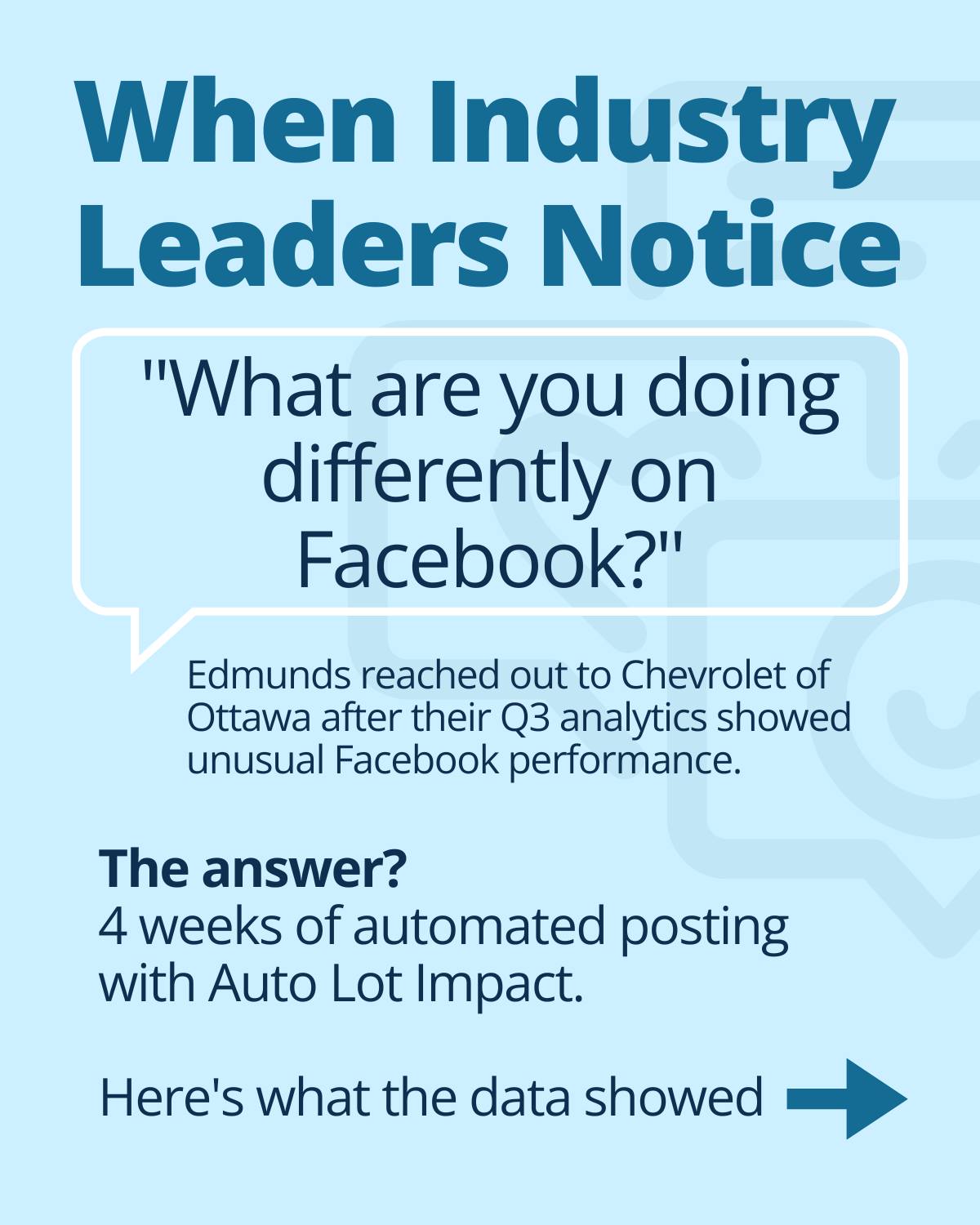
Last week, one of our customers got a call from Edmunds.
However, this wasn't a sales call nor a routine check-in. Edmunds reached out to Chevrolet of Ottawa because their Q3 analytics had flagged something unusual. Facebook traffic to the dealership's website was performing well above expectations and they wanted to know what had changed.
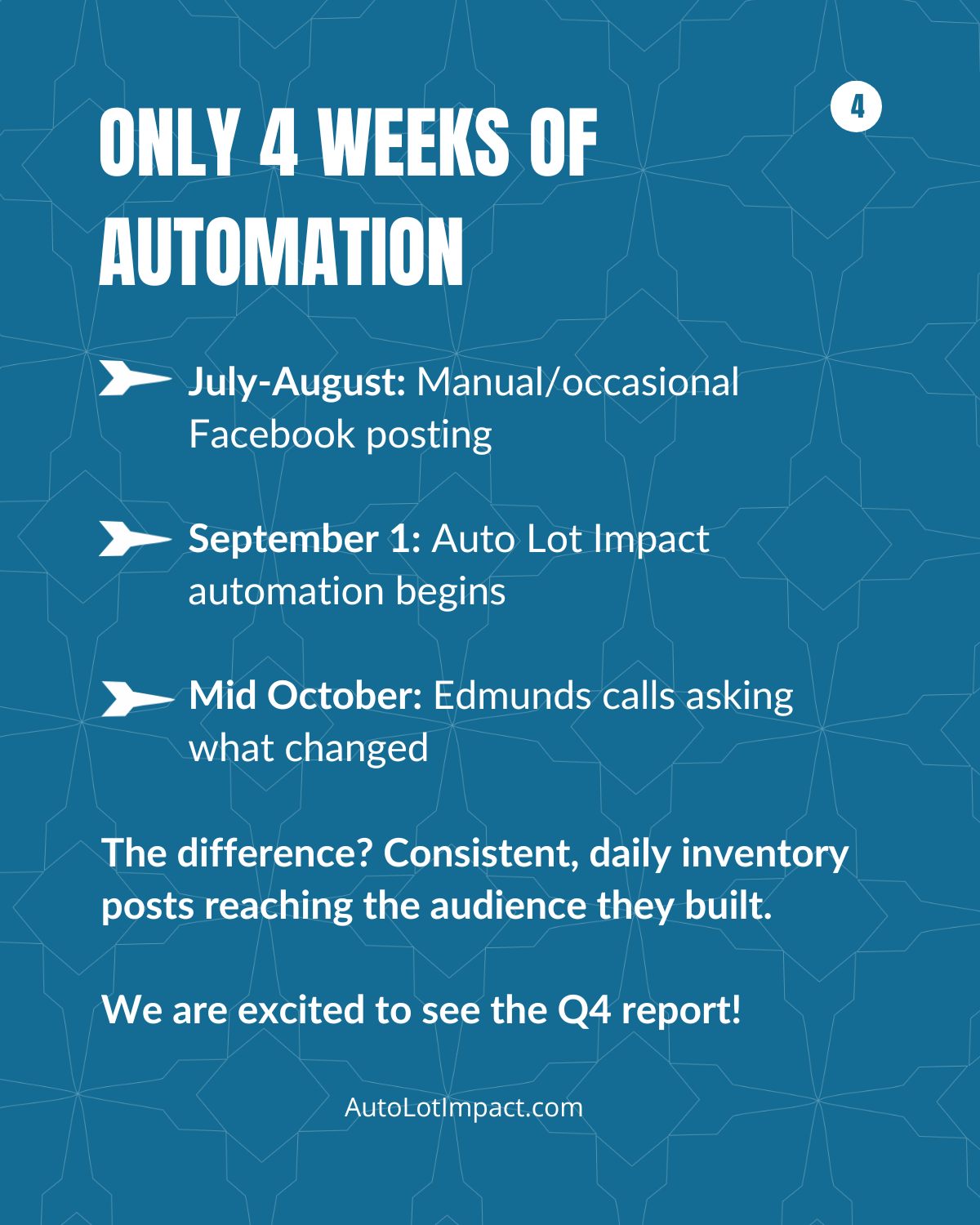
The answer was four weeks of automated posting with Auto Lot Impact.
The background
Before Auto Lot Impact, Chevrolet of Ottawa was doing what most dealerships do: posting to Facebook manually, occasionally, whenever someone had time, and their Facebook page reflected that with the kind of sporadic, inconsistent presence that most dealerships are stuck with.
That changed when Auto Lot Impact automation started posting as part of our pre-launch beta testing. Daily inventory posts were generated automatically and published to their Facebook page without anyone on the team needing to think about it, and by mid-October, Edmunds was on the phone asking questions.
What the data showed
Edmunds analysed Chevrolet of Ottawa's Q3 performance and shared their findings, and the results from just four weeks of automation were significant.
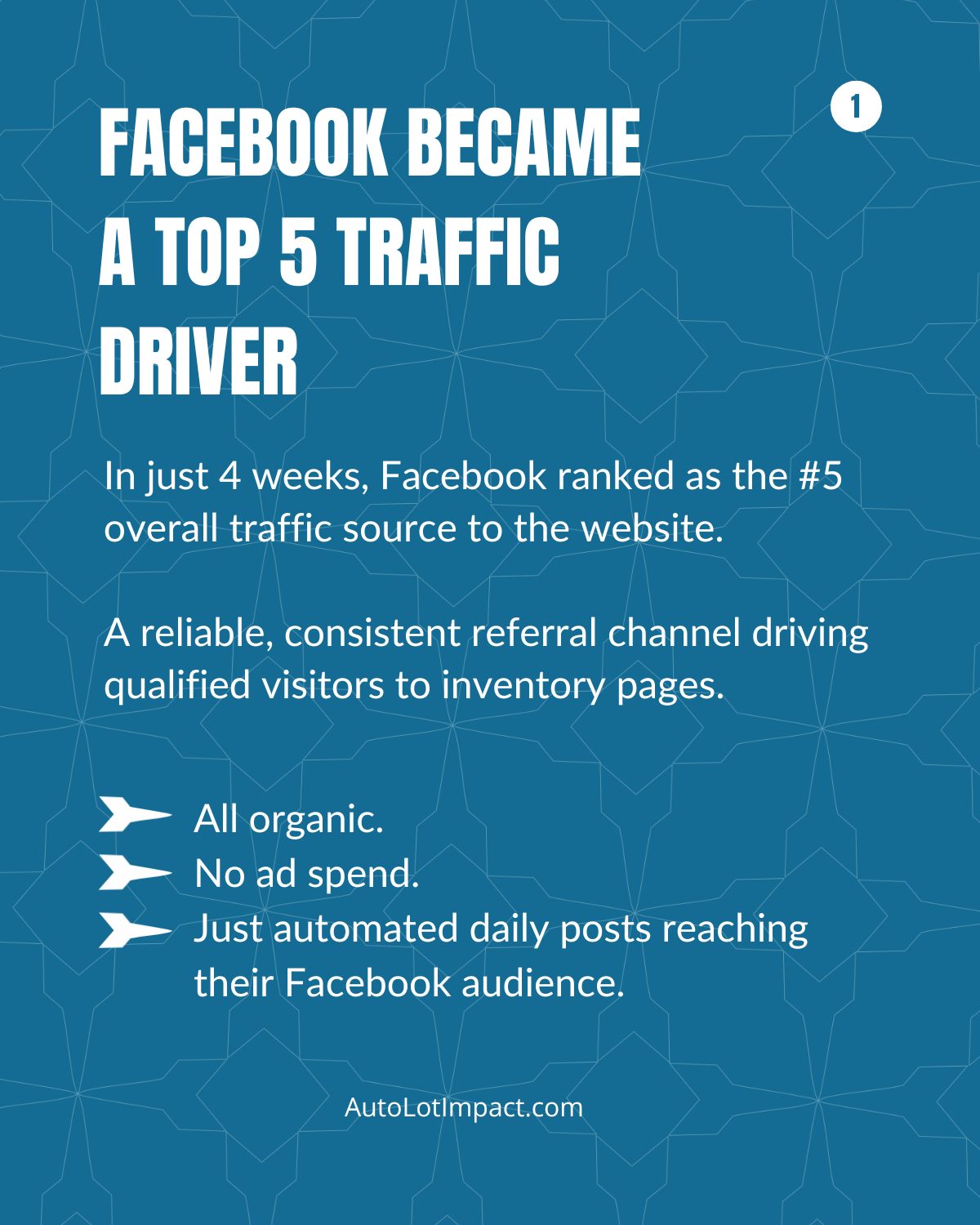
Facebook became a top 5 traffic source
In four weeks, Facebook ranked as the number five overall traffic source to the dealership's website, driven entirely by organic posts with no ad spend behind them whatsoever.
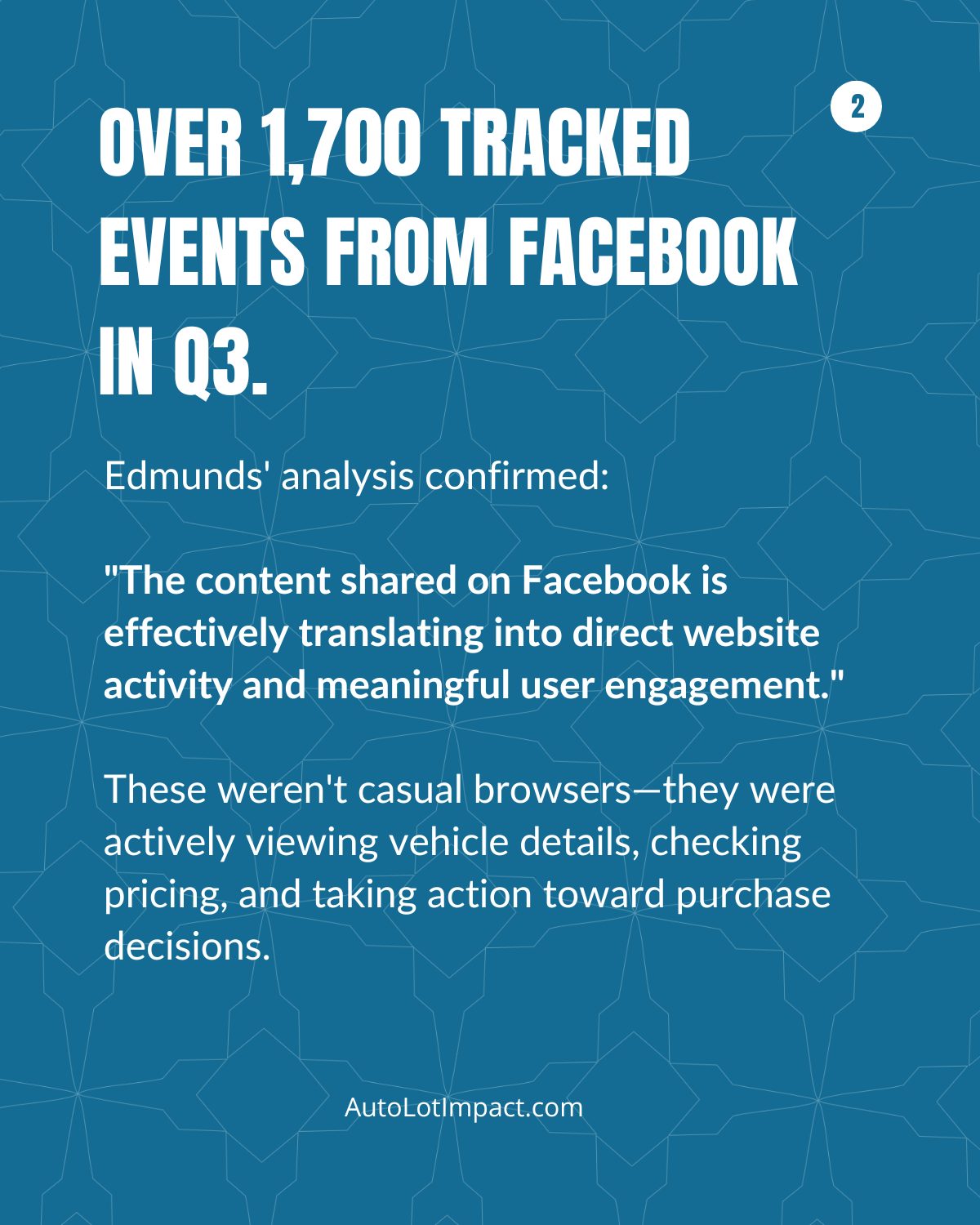
Over 1,700 tracked events from Facebook in Q3
Edmunds confirmed that the content being shared on Facebook was directly translating into website activity and meaningful user engagement. These were not casual browsers, as visitors were actively viewing vehicle detail pages, checking pricing, submitting forms, and taking actions that indicate genuine purchase intent.
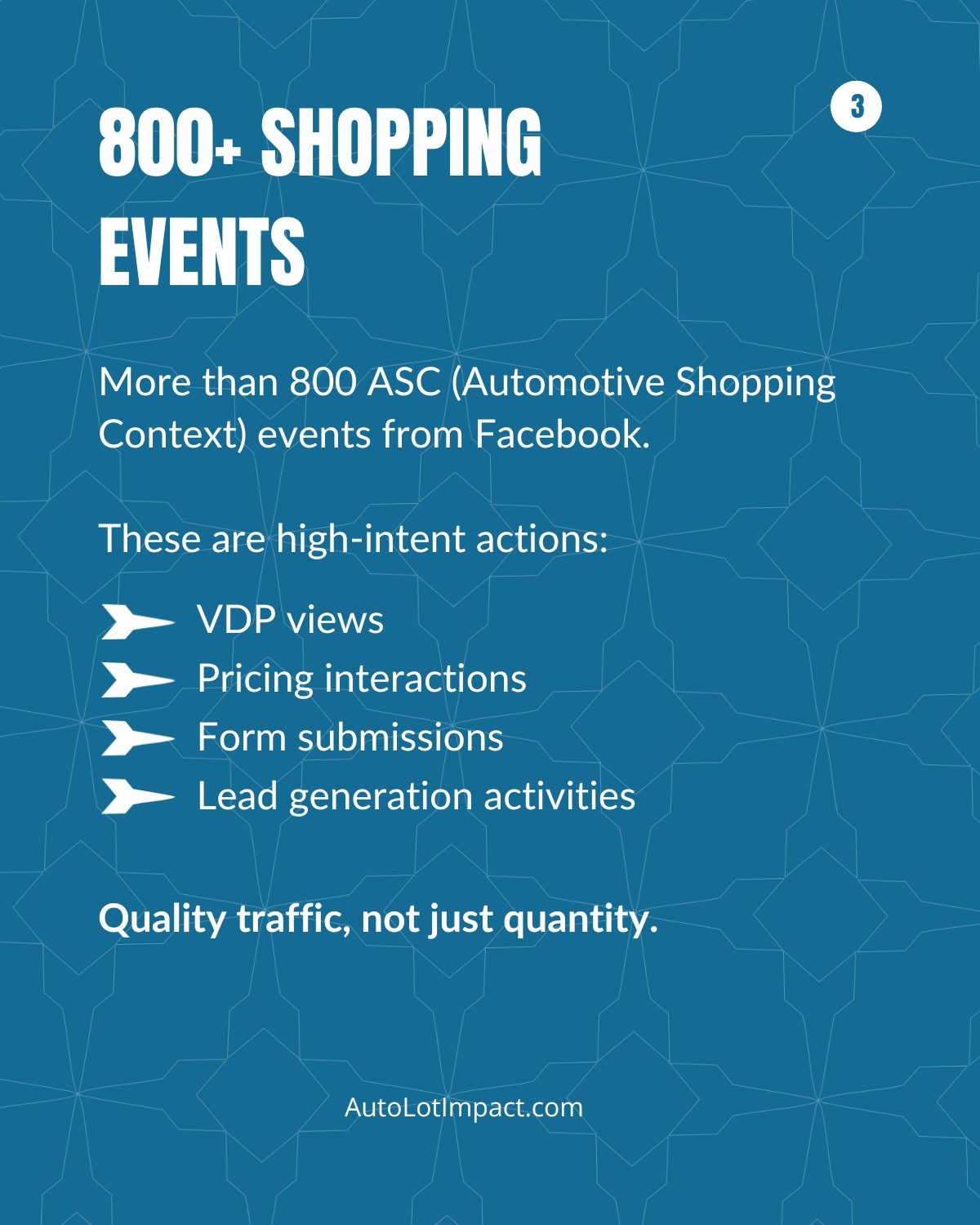
Over 800 Automotive Shopping Context events
More than 800 ASC events were tracked from Facebook traffic alone. ASC, or Automotive Shopping Context, is the industry term for high-intent automotive shopping actions including VDP views, pricing interactions, form submissions, and lead generation activities, and these were people who arrived from Facebook and then did something meaningful on the site.
What made the difference
The timeline tells the story clearly. In the months before automation, posting was manual and occasional and the results reflected that. When consistent daily posting started during the summer months the numbers shifted, and by mid-October Edmunds was calling to ask what had changed.
The difference was not a new ad campaign or a change in strategy but simply consistent, daily inventory posts reaching the audience Chevrolet of Ottawa had already built on Facebook, automatically, without any additional work from the team.
What Edmunds said
In their analysis, Edmunds confirmed that the Facebook content was "effectively translating into direct website activity and meaningful user engagement" and coming from one of the most respected data sources in automotive retail, that is an assessment worth paying attention to.
What this means for your dealership
Chevrolet of Ottawa is not a large dealership with a dedicated marketing team but rather a small franchise dealer running a busy operation where, like most dealerships, social media was never going to be anyone's top priority.
Inventory posting automation changed that, and their Facebook page went from occasional posts to a consistent, daily source of qualified traffic to their inventory pages with results significant enough that an industry leader noticed and called to ask what they were doing.
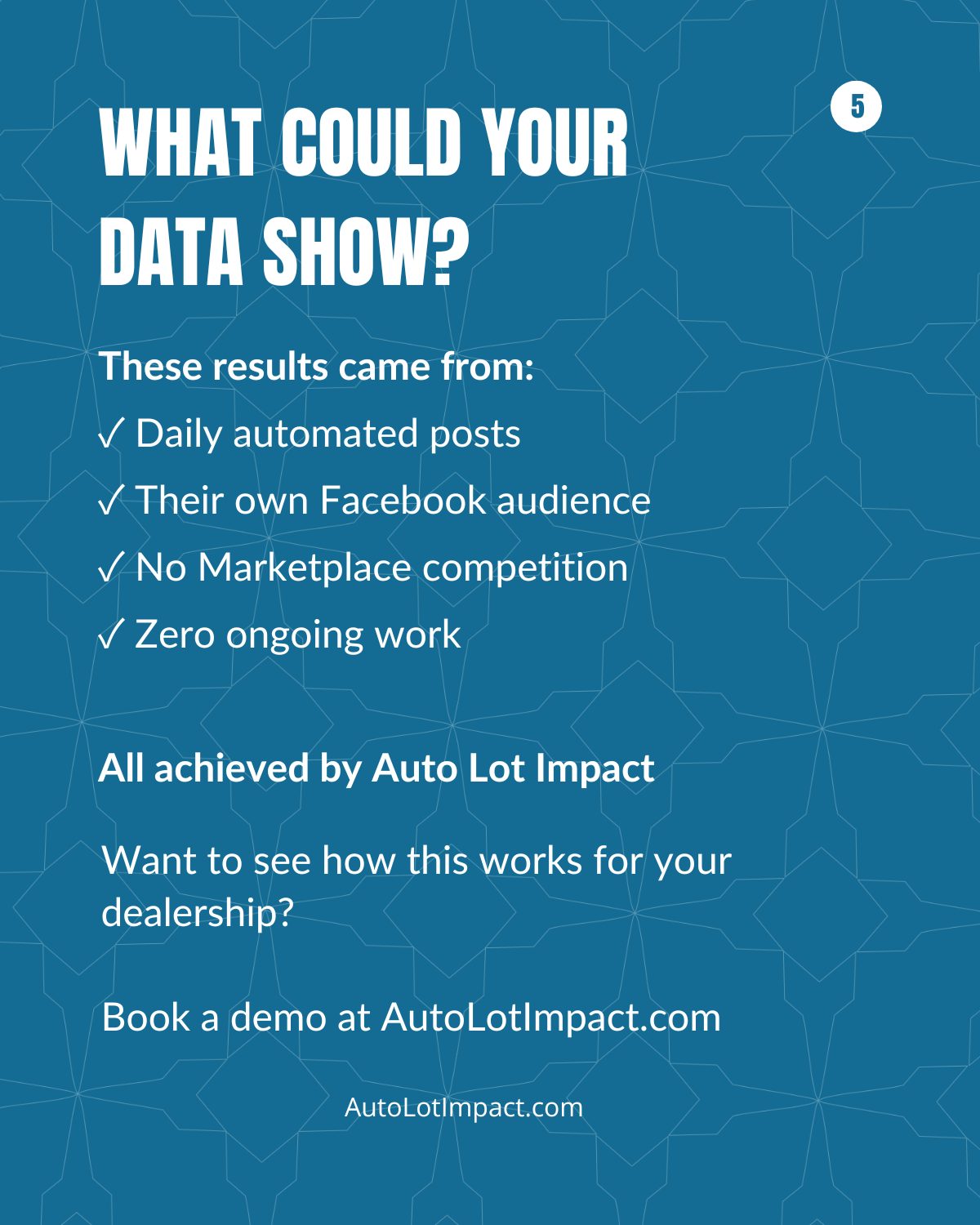
That is what Auto Lot Impact is built to do. Not to replace your marketing strategy, but to make sure your inventory is in front of people every single day without your team having to make it happen.
We are excited to see the Q4 data.